How to (sensitively) track time off for private appointments
Wednesday, 04th May 2022, by Tony Bushell


Transparency is an important part of workplace culture. However, there are times when your employees don’t want to ‘share all’ with their colleagues – like when they’re attending a personal appointment during work hours. Yet team members still need to know someone’s not available when arranging meetings and allocating tasks.
What’s the best way to handle sensitive commitments with discretion, while still being clear about people’s availability?
Let’s take a closer look…
Tracking personal appointments helps teams plan their workload
The best-run businesses are built on clear lines of communication. But as we move into a new era of flexible and remote working, it’s becoming harder to maintain communication levels; staff can’t just look over and see whether someone’s at their workstation.
Your employees need a way of checking someone’s availability from any location – and we’re not just talking about when people are working versus when they’re on holiday. Capturing information such as when staff are working from home, when they’re attending external meetings and when they’re at personal appointments will help teams to plan workload more effectively.
For example, if a team member has booked annual leave, colleagues will know not to schedule any tasks or meetings for them that day. However, if an employee has booked a dentist appointment in the morning, colleagues can still allocate them work for the afternoon.
Equally, scheduling transparency can help people manage appropriate channels of contact. For instance, someone out at a meeting can still pick up and respond to messages, but somebody on compassionate leave shouldn’t be disturbed.
Understanding when somebody is out of the office can also help teams to plan their own time off. Staff can avoid booking annual leave on the same day as a close colleague – or if somebody is out at a meeting in the morning, they can book their dentist appointment during the afternoon.
Keeping track of smaller appointments allows your workforce to balance their professional and personal commitments while minimising their impact on company productivity. In fact, many people are writing this information in their individual work calendars already; it’s just not being recorded centrally for others to factor-in.

Some employees want to keep personal appointments private
While it makes sense for the whole company to know when a colleague is on holiday or attending an external meeting, there are some events that people don’t want broadcasted to their peers. For example, staff may need to discretely block out time in their diary to attend:
- Diagnostic tests for a potential illness or health condition
- Ultrasound scans in early pregnancy
- Fertility treatment
- Mental health matters such as counselling sessions
- Close family members’ medical appointments or treatments
- Funerals
Your company needs to find a way to record staff absences while respecting people’s privacy; Something that can’t be easily achieved if you’re using a spreadsheet to run your staff holiday calendar.
Personal appointments: who needs to know?
Managing staff absence is not as simple as choosing whether to write down why someone’s taking time off. Often, sharing sensitive information on a ‘need to know’ basis with HR personnel can offer the employee concerned better quality support.
For instance, HR officers may need to carry out a workplace risk assessment for a pregnant employee, to ensure they’re operating in a safe and comfortable environment. Or they may want to identify ways to reduce the stress on an employee struggling with their mental health.
Sharing personal appointment information with managers and team leaders can also help them to allocate workload appropriately. Someone who’s just been diagnosed with cancer may not be the right person to lead an intensive project, for example. Giving them a role with the flexibility to take time off for treatment and recovery may be more suitable.
Equally, someone caring for a sick relative may benefit from flexible hours and the opportunity to work from home when necessary. They still play a valued part in your company’s success, but they’re able to prioritise others’ needs at a difficult time.
Rather than creating multiple spreadsheets – that could fall into the wrong hands – to manage these scenarios, your business needs a secure online staff management platform that can customise how each type of leave is displayed.

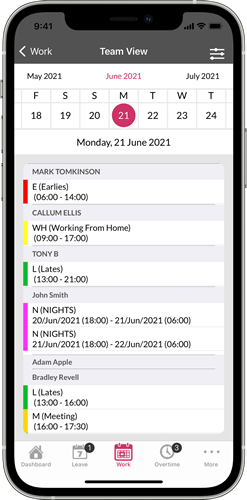

Taking a flexible approach to managing staff absence
Moving to an online leave management system is a simple and effective way to track people’s time off in greater detail. And it gives you the power to control who sees what information, while providing everyone in your company with access to a central holiday calendar.
By creating rules and permissions around each type of leave (in line with your internal company policies), you can set parameters on data visibility. Non-contentious absences such as holidays and time off in lieu can be viewed in full, but details on sensitive personal commitments are safeguarded from the wider workforce.
WhosOffice is a digital staff holiday planner that enables companies to manage all employee absences in one place – whether people are taking time off for their pleasure, their health and wellbeing, or to attend external meetings. So you can support staff wellbeing as effectively and discreetly as possible, while still prioritising company productivity.
Start your free WhosOffice trial now to manage employees’ essential appointments within your holiday calendar.


FREE TRIAL
Try WhosOffice for free before you sign up – no credit card required

EXPERT SUPPORT
We offer telephone and email support to our customers, at no extra cost

NO CONTRACTS
Cancel when you like with just 30 days’ notice

NO HIDDEN COSTS
We don’t believe in add-on charges or set-up fees
Start your free WhosOffice trial now
Photo by Tim Mossholder of Pexels.com.